

Timing Chain vs. Timing Belt: Differences, Maintenance, and Replacement Costs
· Salsal Marketing
Key Takeaways
-
Timing belts are rubber and require scheduled replacement; timing chains are metal and last significantly longer
-
Both synchronize the crankshaft and camshaft to keep engine timing accurate
-
Timing belt or chain failure on an interference engine can cause catastrophic internal damage
-
Timing belt replacement is cheaper per service but required more frequently than chain replacement
-
When buying a used or replacement engine, always check the timing belt service history
What Is the Difference Between a Timing Chain and a Timing Belt?
The timing chain vs timing belt debate comes down to materials, maintenance, and what happens when things go wrong. Both do the same job.
The timing system keeps the crankshaft and camshaft synchronized. The crankshaft drives the pistons. The camshaft controls the valves. These two must move in precise coordination. The timing belt or chain is what maintains that sync.
What Is a Timing Belt?
A timing belt is a rubber belt with teeth on the inside. Those teeth grip sprockets on the crankshaft and camshaft to prevent slipping. It runs dry, meaning there is no oil lubrication involved.
How a Timing Belt Works
The crankshaft turns the timing belt, which turns the camshaft. The teeth keep everything in sync. Because it runs dry, it is relatively quiet and does not require engine oil to function.
A timing belt kit also includes a tensioner and idler pulleys. Many Honda and Toyota engines run the water pump off the timing belt, which is why both are often replaced together.
Common Timing Belt Problems
Timing belts wear out from age and mileage. Common problems:
-
Cracking or fraying from heat exposure and age
-
Tooth wear from high mileage use
-
Tensioner failure causing the belt to lose tension or slip
-
Oil contamination from nearby leaks degrading the rubber
Timing belt warning signs include squealing or ticking noises and rough running. Often there are no visible symptoms, which is why the replacement interval matters.
What Is a Timing Chain?
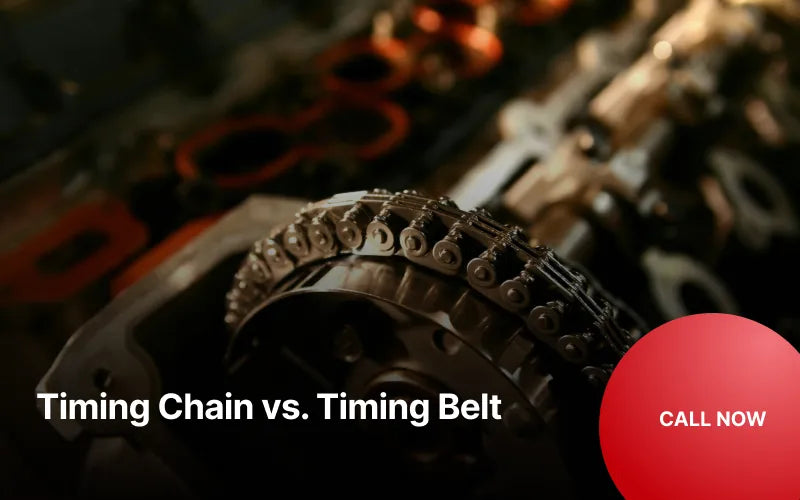
A timing chain is a metal roller chain, similar in concept to a bicycle chain but far more precise. It lives inside the engine and runs in engine oil, which lubricates and extends its life significantly.
How a Timing Chain Works
Like a belt, the chain links the crankshaft and camshaft sprockets. Chain guides keep it on track, and a tensioner maintains correct tension. Because it is metal and oil-lubricated, it handles heat and wear far better than rubber.
Engines like the Nissan VQ35DE, many Subaru models, and some Honda and Toyota engines use timing chains.
Common Timing Chain Problems
Timing chains do not follow a fixed schedule, but they do wear out. Common problems include:
-
Chain stretching over very high mileage
-
Chain guides wearing down or breaking apart
-
Tensioner failure causing the chain to go slack
-
Timing chain rattle at startup, especially in cold weather or when oil is low
Stretched timing chain symptoms include rattling on cold starts, engine misfires, rough idle, and in serious cases, timing that slips enough to trigger engine codes.
Timing Chain vs. Timing Belt: Key Differences
|
Feature |
Timing Belt |
Timing Chain |
|
Material |
Rubber |
Metal |
|
Lubrication |
None, runs dry |
Engine oil |
|
Typical Lifespan |
60,000 to 100,000 miles |
150,000+ miles |
|
Replacement |
Scheduled service required |
Replaced when worn or failed |
|
Common Noise Issue |
Minimal when healthy |
Rattles when worn |
|
Replacement Cost |
Lower per service |
Higher due to labor |
Timing Belt and Timing Chain Warning Signs
Timing belt warning signs:
-
Ticking or slapping noise from the front of the engine
-
Rough idle or misfires without another clear cause
-
Visible cracking on the belt if inspected
-
Reaching the manufacturer replacement interval
Timing chain symptoms:
-
Rattling noise at cold startup that may fade as the engine warms
-
Check engine light with timing-related diagnostic codes
-
Engine misfires or rough running
-
Sluggish performance and reduced throttle response
If you notice timing chain noise at startup, do not ignore it. A chain rattle usually means the tensioner is weak or the chain has stretched.
How Long Do Timing Belts and Timing Chains Last?
Timing belt lifespan typically falls between 60,000 and 100,000 miles, depending on the manufacturer and engine design. Some older Honda and Toyota engines specify intervals as low as 60,000 miles. Always check the owner’s manual for the exact interval.
Timing chain lifespan is harder to pin down. Many chains last 150,000 to 200,000 miles with proper maintenance. But neglected oil changes accelerate wear on the guides and tensioner. Consistent oil maintenance is what keeps it healthy.
Timing Belt vs. Timing Chain Replacement Costs
Here is a rough idea of what to expect:
|
Service |
Approximate Cost |
|
Timing belt only |
$200 to $500 |
|
Timing belt kit |
$400 to $900 |
|
Timing belt kit plus water pump |
$600 to $1,200 |
|
Timing chain replacement |
$800 to $2,000+ |
Timing belt replacement cost is lower per service, but you will do it more often. Timing chain replacement cost is higher because the chain sits deep inside the engine and requires significant labor.
When replacing a timing belt, mechanics recommend replacing the tensioner, idler pulleys, and water pump together. This saves labor cost since everything is already apart.
What Happens When a Timing Belt or Chain Fails?
This is where it gets serious. If timing fails on the wrong engine design, valves and pistons collide.
This is where interference engine vs non-interference engine matters:
-
Interference engine: Valves and pistons share space at different points in the cycle. If timing fails, they collide. This causes bent valves, damaged pistons, and potentially a destroyed cylinder head.
-
Non-interference engine: Valves and pistons do not share space. If timing fails, the engine stalls but physical damage is less likely.
Most modern Honda, Toyota, Nissan, Subaru, Lexus, Acura, and Infiniti engines are interference designs. Broken timing belt symptoms include a sudden stall, a loud noise from the engine, and complete loss of compression.
How to Maintain Your Engine’s Timing System
Key steps to stay ahead of timing system failure:
-
Follow manufacturer replacement intervals exactly for timing belts
-
Never skip oil changes on timing chain engines since the chain depends on oil pressure
-
Always replace the full timing belt kit, not just the belt
-
Listen for new noises on cold starts
-
Ask about timing belt history when buying a used vehicle
-
Check warranty for timing belt requirements before installing a replacement engine
If installing a Honda K24A engine and belt history is unknown, replace it before or right after installation. For the Nissan VQ35DE with its timing chain, oil service history is what matters most.
Frequently Asked Questions
Is a timing chain better than a timing belt?
Not better, just different. Chains last longer without scheduled replacement but cost more when they fail. Belts need regular service but each job costs less.
Which lasts longer, a timing chain or timing belt?
Timing chains generally last longer. Many exceed 150,000 miles with proper oil changes. Timing belts typically need replacement every 60,000 to 100,000 miles.
How do I know if my car has a timing chain or belt?
Check the owner’s manual or look up your engine model online. If a timed service interval is listed, it has a belt.
What are the warning signs of a failing timing chain?
Rattling at cold startup, engine misfires, rough idle, and check engine light codes related to camshaft timing.
How much does timing belt replacement cost?
Expect between $400 and $1,200 depending on the vehicle, local labor rates, and whether you are replacing the full kit with the water pump.
How much does timing chain replacement cost?
Roughly $800 to $2,000 or more. The chain lives inside the engine, making it far more labor-intensive.
Can a broken timing belt destroy an engine?
Yes, on interference engines. Bent valves, damaged pistons, and head damage are common results.
Does a used replacement engine need a new timing belt?
If the history is unknown, yes. Replace it before or right after installation. Check warranty for specific requirements.
Looking for a tested replacement engine? JDM Engine Bay has a full selection ready to ship for Honda, Toyota, Nissan, Subaru, Lexus, and Acura. Browse all available engines at JDM Engine Bay.